
Redefine what Design means to Us
I had to change my thinking on my position in my firm and in my profession if I was going to stay in the field of architecture and grow as an architect.

I had to change my thinking on my position in my firm and in my profession if I was going to stay in the field of architecture and grow as an architect.

How does one design like an architect? Here’s a spoiler, the answer isn’t tool specific.

After reading this post, how would you describe the firm you work at? Will you realize your firm is broken or much stronger than you expected?

What’s the value of a licensed architect? I wish that were a simple answer.

Cartoons and intros or titles that could be the start of a good joke. This is how I am writing blog posts now, I guess. I can live with that. I’ve had a lot of great meetings with local Seattle-based architects this week. Here’s what happened at one of those meetings.

It’s time that all architects switch to BIM. This is 2014 after all. Are you in? Or are you going to quit?
Guest blogger Alicia Liebel Berg shares her thoughts on Kayne West’s visit to Harvard.

We all just want to say “Hi, I am an Architect.” But it’s almost never that easy. Here’s a simple rule and some related thoughts.

Now that I look back on it, if that guy wanted to, he could have seriously injured me with one swing of his giant fist. That would have be hard to explain to my wife.

We have powerful digital tools. But neither Ludwig Mies van der Rohe nor Le Corbusier needed them to be famous. Shouldn’t you just follow their lead?
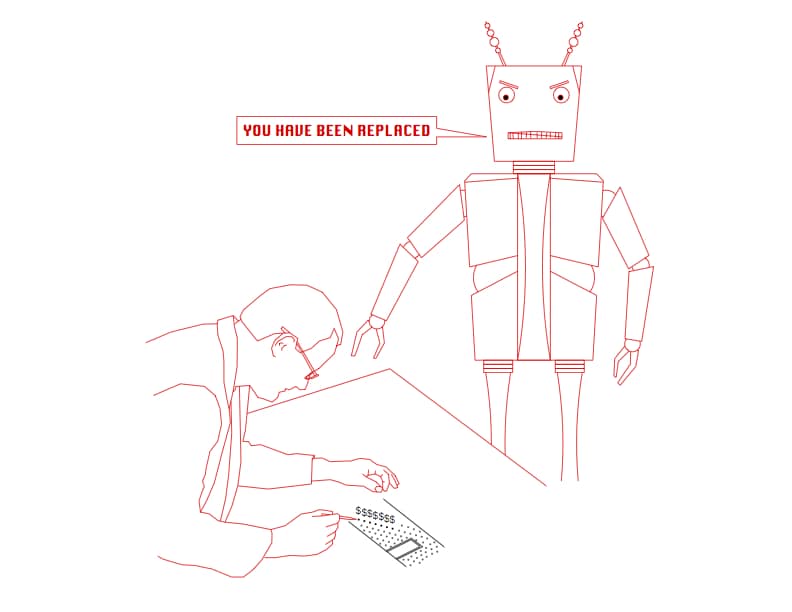
What is the number one problem plaguing architects? What is their greatest fear? The Usurper.

Two upcoming seminars on BIM reveal some problems we have in the architectural community.

I wish I had been there when he said to my friend that all I ever wanted to be was a BIM Manager. What a misunderstanding of me and the role of a BIM Manager.
This is the second post dedicated to all the emotion and confusion surrounding the word architect. In all fairness, I could have used the person I singled out in the first post as the non-architect instead of Carlos for this post. The results would be pretty much the same. But I wrote this article first and I also know Carlos, so there’s some added personal touches that I find poignant.

This is the first of a few posts I am going to write on all the emotion and confusion surrounding the word architect: unlicensed architects, who can be called an architect, the licensing process itself, other industries co-opting the term architect, and other related topics. Future posts will aim to approach these questions from a few different angles. There’s a really interesting conversation exploring this topic over on LinkedIN. Check
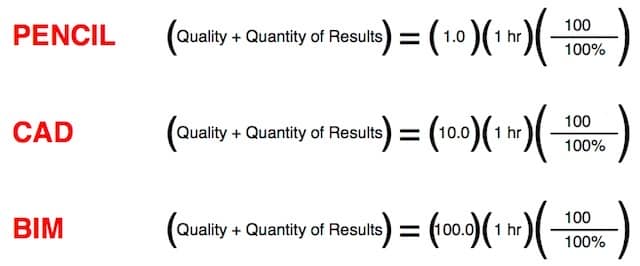
Today on Twitter, in response to this post about the most amazing BIMx model I’ve seen, I saw a Tweet that went like this: “4all their power computers are just tools #architects still need 2do the hard work of #design” Yes, but. Anyone who thinks using computers is about making things easier is wrong. Well maybe not wrong, but missing the bigger picture. Using computers (and technology in general) is
I was on Twitter earlier in the week and noticed that AIA National is looking for architect bloggers to write about “architect as leader”, to help expand on the AIA 2013 National Convention theme of Building Leaders. So… what does Architect as Leader mean? The First Rule of Architecture School is Don’t Break this Rule I write about some wild stuff. I talk about monetizing BIM through micro-transactions via Augmented
My career has gone astray I followed the proper path. Summer internships, an architecture job right out of school, hopping between firms to climb the ranks, getting exposure with different project types, taking on leadership challenges where possible, moonlighting anytime the opportunity arose. Then a funny thing happened on the way to becoming the Project Architect/Design Architect I assumed I wanted to be. I met ArchiCAD. We fell in love.

I talk with a lot of architects, interns, and people who studied architecture but went in different and/or non-traditional directions. There is a particular type of architect that comes up again and again in these conversations. A prototypical architect that we all seem to measure ourselves against: the Natural Architect. But that’s not the right term (we’ll get to that in a moment). Read the comments of my previous posts

Maybe certain former co-workers won’t like me sharing these kinds of stories. But I doubt they’ll ever read them. And if they do, I hope they can understand that this isn’t about us; it’s about something much larger. I can’t remember when it happened. I think it was during an annual review. But it might have been during one of the dozen meetings I had with various co-workers leading up

I’ve been using ArchiCAD since 2006. Over 7 years now… kind of surreal and surprising. I first modeled in 3D on a computer back in 1994. I was 13 and my older brother acquired a copy of 3D Studio R4 for me. Best not to think too hard about that one. But even by then I was already quite familiar with 2D drafting. I first used AutoCAD in 1987 or

I’ve seen into the Chasm. It’s beautiful, ambitious, and not the architectural graduates of times past. Back in January I had coffee with two students from the University of Minnesota that I’m mentoring. I asked them a question, “do you have any classmates who still say ‘I can’t wait to graduate and start designing buildings!’?” The answers: “We’re not allowed to be that optimistic” and “There are people who say

 The Generation Y Architect In February 2012, during a session at the AIA Minnesota Leadership Forum, I discovered that I am a stereotype. Painfully so. I am Generation Y. In a room with fifteen Generation X architects, I was the oddball. It happened again when I was at the AIA Minnesota Board Retreat eight months later. It was a room of fifty architects. We had to order a list of

Yesterday I wrote this other post. You might want to read it first. But you don’t need to. In fact your ignorance of that discussion (amazing comments by the way), might help answer the riddle below. A tale of Three (Capital A) Architects Three Architects are walking down a road. They have just been asked by the Wealthiest Man in the Land to design the Greatest Building Ever. Each is

That’s what Architects are supposed to do, right? There’s a big series of posts coming about this topic, but I wanted to foreshadow a bit and ask a question. If you were to give a two word description of the following architect, what would it be: The architect who loves the act of designing through the media of our trade-whether pencil on trace, scale models, or digitally. After being asked

The traditional paths for a bright-eyed go-getter were virtually non-existent; both design opportunities and client interactions were meager and sparse.

If you are reading this you are a dinosaur. The digital natives will steal your job. But that’s okay because you won’t be qualified to do your job when they start taking responsibility from us. And I do mean us (more on that maybe tomorrow). So what are we going to do to survive? Okay dinosaurs. I’ve got a question for us. If we don’t design buildings that look like
In a world of shoegnomes, there are workmonsters… Much like I came up with the realization that I was a shoegnome years before I started my company and blog, the concept of workmonsters has been floating around in my head for a long time. What are workmonsters? They are a special breed of coworkers. I have a feeling that you already understand. This is just a small sampling of archetypes.